Subtitling vs dubbing isn’t just a choice; it’s a strategic decision that shapes how your content connects with audiences worldwide. You might default to outsourcing through long LSP chains, but that often means delays, hidden costs and diluted quality. What if your localisation services UK partner handled everything in-house, led by senior engineers who know the craft inside out? Let’s unpack when to pick subtitling or dubbing based on your audience, budget, creative goals and accessibility needs—and how 2002 Studios Media Ltd offers a smarter, faster route.
Understanding Subtitling vs Dubbing
Subtitling and dubbing are two powerful tools in media localisation. Understanding the differences between them is crucial for making the right choice for your project.
Key Differences Explained
Subtitling involves displaying text on the screen that translates or transcribes the spoken dialogue. It’s often less expensive and faster to implement than dubbing. Subtitles can be ideal for audiences who prefer hearing the original audio, preserving the actors’ performances. Dubbing, on the other hand, replaces the original audio with recorded voices in a new language. This method is more immersive, as viewers don’t need to read while watching. It can create a seamless experience, especially for audiences not accustomed to reading subtitles.
For more information on subtitling and dubbing, check out this comprehensive guide.
Factors Influencing Your Choice
When deciding between subtitling and dubbing, consider your target audience’s preferences and the cultural norms of the region. Some audiences prefer reading subtitles, while others might find them distracting. Also, consider the content type. Fast-paced dialogue or complex subjects might be better suited for dubbing to avoid overwhelming viewers with too much reading.
Benefits of Each Approach
Subtitling is cost-effective and quick, making it suitable for projects with tight budgets or deadlines. It also maintains the authenticity of the original performance, which can be important for artistic works. Dubbing, however, offers a fully localised experience, potentially increasing viewer engagement. It’s particularly beneficial for children’s content or regions where reading proficiency varies.
Tailoring Localisation to Your Needs
Your localisation strategy should reflect your audience, budget, creative goals, and content integrity. Here’s how you can align these elements for the best outcomes.
Audience and Market Considerations
Understanding your audience is key. If you’re targeting a market where viewers prefer content in their native language, dubbing might be the way to go. However, if your audience values originality and authenticity, subtitling could be more appealing. Consider regional preferences and age demographics when making this decision.
Budget and Time Constraints
Budget and time are often intertwined. Subtitling is generally more affordable and quicker to execute, allowing for faster turnaround times. This can be crucial for projects with tight deadlines. Dubbing, while more costly, might be justified if the content demands a high level of audience immersion.
Creative Intent and Content Integrity
Your creative vision should guide your choice. Subtitling maintains the original audio, preserving the actors’ voices and nuances. This might be essential for films or content with significant artistic value. Dubbing can modify the viewing experience but might be necessary to ensure the message resonates with the audience.
Partnering with 2002 Studios Media Ltd
Choosing the right partner can make or break your localisation project. Here’s why 2002 Studios Media Ltd is your best bet.
In-house Localisation Engineers
At 2002 Studios Media Ltd, we believe in keeping everything under one roof. Our team of experienced engineers leads projects, ensuring quality and consistency. By avoiding outsourcing, we manage every detail, from script preparation to final delivery, guaranteeing you get the best results.
Streamlined Project Management London
Our project management approach is designed for efficiency. Based in London, we offer global reach with local expertise. We handle everything, from eLearning localisation to motion graphics localisation, ensuring your project runs smoothly and on schedule.
Quality Assurance and Global Reach
Quality is at the heart of what we do. We offer services in over 60 languages, providing you with the expertise needed for global projects. Our commitment to quality assurance means your content is delivered accurately, on time, and on budget.
Frequently Asked Questions
What is the main difference between subtitling and dubbing?
Subtitling translates or transcribes spoken dialogue into on-screen text, preserving the original audio, while dubbing replaces original audio with new voice recordings in another language.
Which is more cost-effective, subtitling or dubbing?
Subtitling is generally more cost-effective and faster to implement compared to dubbing, which involves additional voice recording and synchronisation processes.
How do I decide whether to use subtitling or dubbing for my project?
Consider your target audience’s preferences, budget, and the nature of your content. Subtitling is ideal for retaining original audio, while dubbing offers a more immersive experience.
What services does 2002 Studios Media Ltd offer?
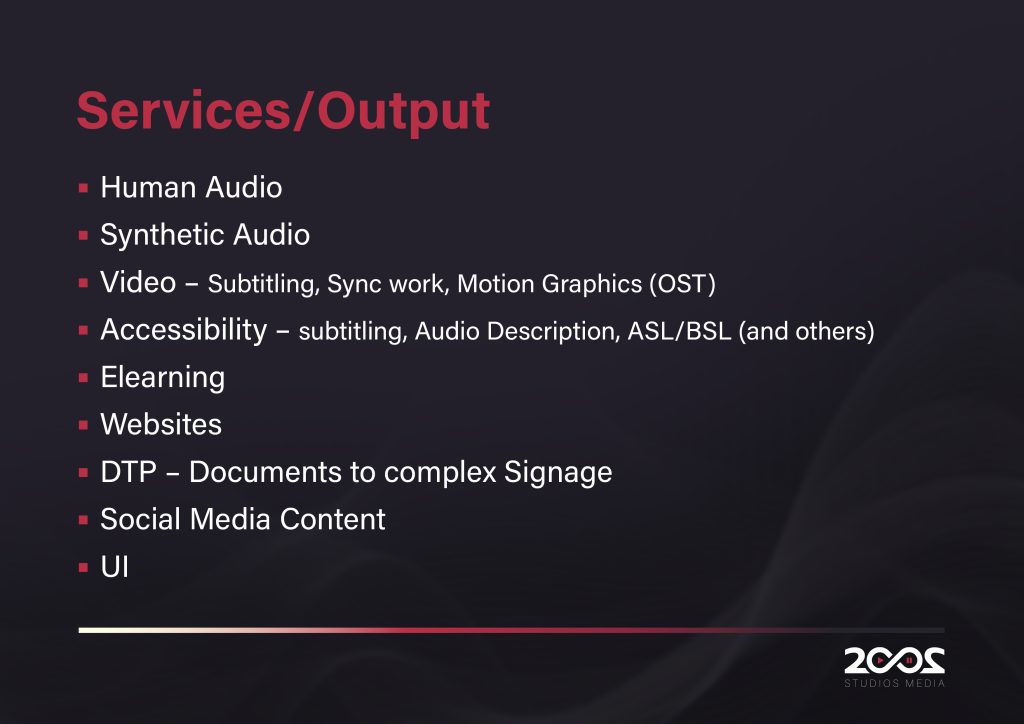
We offer comprehensive localisation services, including subtitling, dubbing, eLearning, and accessibility services, all managed in-house by experienced engineers.
Why choose 2002 Studios Media Ltd for my localisation needs?
We provide end-to-end solutions with no outsourcing, ensuring quality and consistency across all projects. Our global reach and local expertise make us a reliable partner for your media localisation needs.